
Not Just Any Method Will Do
What shoelaces reminded me about maths pedagogy

I want to share a moment when I felt like a pretty rubbish dad.
I was trying to teach my son how to tie his shoelaces. He’s a keen footballer (Up the Villa!) but he always needed help with his laces. I broke the process down into the small steps we all know we should teach in, modelling each part and practising one step at a time. But there was one step he just couldn’t get.
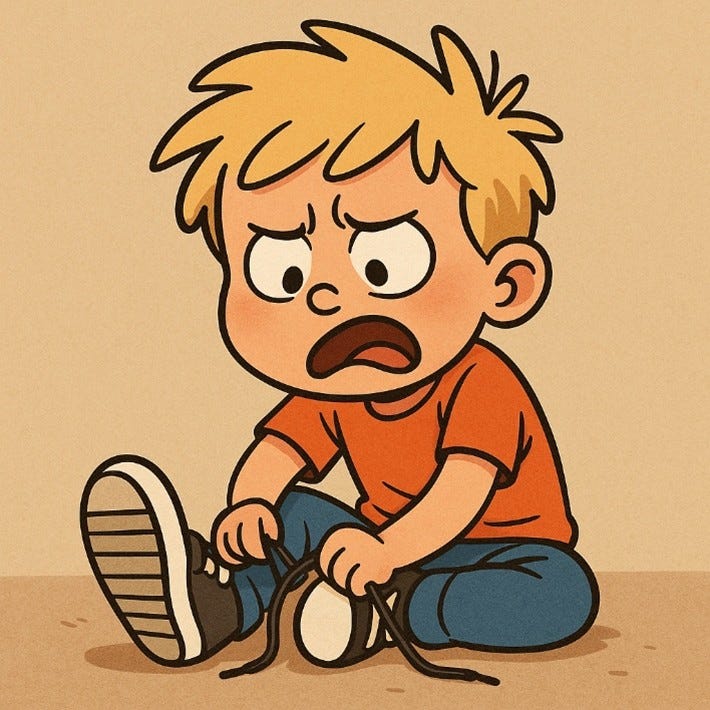
We kept persevering. I reminded him about perseverance too. But after lots of effort and lots of tries, he still wasn’t getting it. I could feel my own frustration building and I could see his mounting as well.
So I stepped away and thought there must be another method. I’d only ever tied shoelaces using one approach and didn’t know any others. I hadn’t even heard of the “crossover bunny” method. I watched a quick video, went back to my son and within five minutes he’d done it.
The smile on his face was brilliant. The hug I got afterwards was priceless.
But the experience made me think about the choice of methods.
I was completely stuck in my own way of doing things. I wasn’t being flexible, which is the opposite of how I like to think I am in the classroom. In school I have a preferred method but I’m open to others when needed. Many teachers say they choose the method they feel most comfortable with or the one they think pupils will prefer. I’m never quite sure how we know this in advance but that’s another issue. Craig Barton wrote a great blog about this, which I fully support.

But let’s assume teachers should use the method they like best. What happens when a child gets frustrated, like my son did?
Eventually, you have to find another method. And that’s good. Of course, I could link the new method back to the original with those powerful prompts: What’s the same? What’s different?
But here’s the thing… tying shoelaces is an isolated skill. It doesn’t really connect to anything else. How you tie your shoes doesn’t affect later learning. Once my son mastered it, that was the end of the journey. He won’t need to adapt that method for a future teacher or another parent. The method worked and it will work forever.
That’s where it differs from teaching skills in maths.
From Shoelaces to Solving Equations
In education, whether in primary or secondary, we’re responsible for making a pupil’s learning journey smooth and coherent. A method that works once is not always the method that will support the next stage.
Take solving a two-step equation which is often taught at the start of secondary school. There are plenty of methods teachers might choose as shared in the image below. Imagine though if each teacher in each year group chose a different one. Also imagine if each teacher referred to the using different language each year! That would be difficult for pupils, especially if they had only just mastered one approach the previous year.
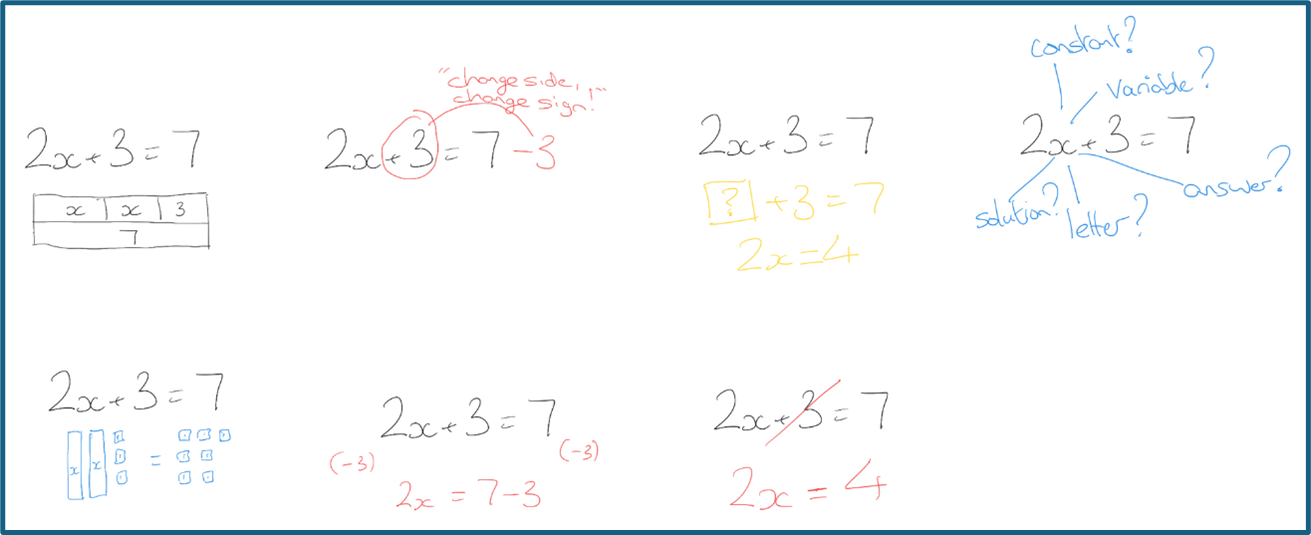
They would be relearning the process again and again. It’s no wonder students get confused.
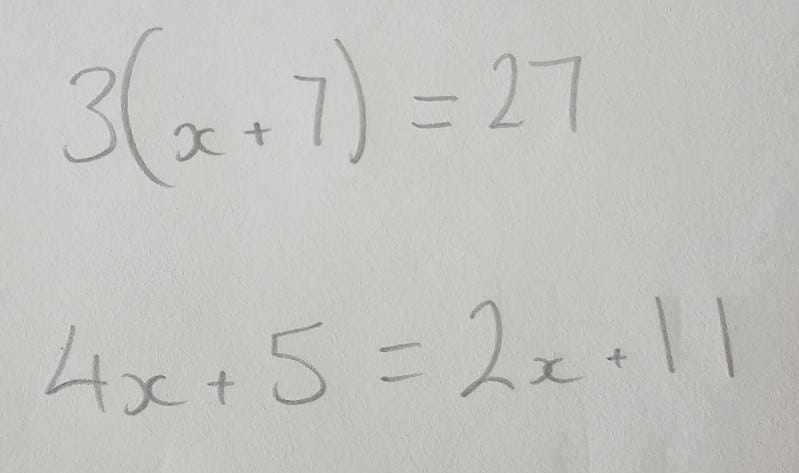
Does it matter? Yes it matters because two-step equations lead into equations with brackets, equations with variables on both sides and then quadratic equations (see below). These topics build on one another. The method chosen now impacts upon what is possible later.
So What’s the Argument?
If a skill is isolated, like tying shoelaces, maybe it doesn’t matter which method we choose as long as it gets the child there.
But if a skill forms the foundation for future learning then the method matters. We need consistency within departments so pupils can build on prior knowledge effectively. It’s about coherence, not teacher preference.
Even with isolated topics, should teachers all choose their own methods? Probably not. I might teach a child in Year 4, but their Year 5 teacher may look at the same idea again. They’ll need to know which method I used. That’s why calculation policies exist in most primaries and in some secondaries. That’s why departments should agree on preferred models and approaches.
Not every pupil will succeed with the first method and that’s fine. But when we provide an alternative, we should then attempt whenever possible to link it back to the initial one with prompts like “What’s the same? What’s different?” That way, pupils form connections and the next teacher can still build on the agreed core method.
Our pupils deserve a smooth learning journey. When we agree on core methods and understand how they connect, we make that journey clearer and more coherent. It’s a small shift with a potentially big impact and it’s something every department can start working on.